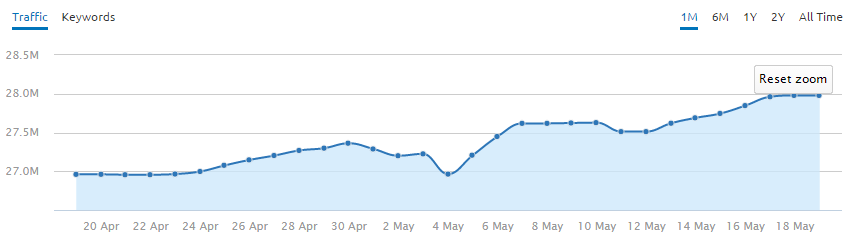
There’s been a fair amount of information written about Google’s featured snippets (aka Direct Answers). Most of these articles and case studies paint a rosy picture where the client is listed as a source in a featured snippet and sees a significant increase in traffic – likely due to the fact the site was previously ranking past the third, fourth or fifth position. And while I don’t doubt their findings, it’s important to test things for yourself.
So, that’s what I did and here are some case studies that both contradict and promote popular opinion. Hopefully this encourages others to perform their own tests and come to their own conclusions. As with many things in SEO, your mileage may vary and you shouldn’t take what “SEO experts” say at face value.
Case Study #1
In this case study, I was closely monitoring the SERPs for a specific “how to” query. At the beginning of the test, the client did not have a featured snippet or direct answer for the query. I made some optimizations and was able to get the client into the featured snippet the next day. Here’s what happened:
4 Weeks at #2 Before Being the Featured Snippet (aka Direct Answer)
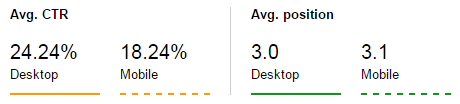
Client was #2 for the target “how to” query (#3 if you count the featured snippet as the first organic listing, which the search console does in this case). During this four week pre-period, there was a competitor that occupied the featured snippet listing.
Here are the average click-through rate and position for the client during this pre-period:
4 Weeks at #2 and as the Featured Snippet:
I then optimized the target page and within one day was able to replace the competitor’s featured snippet with a featured snippet from our client, essentially catapulting it to the top of the search results for the target query. You might think that this resulted in a traffic increase, especially since the client was not in the #1 position, but rather the 2nd organic position (3rd blended).
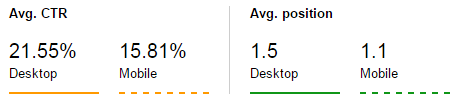
Well, as you can see here, the client did jump to the top of the SERPs, but the CTR and traffic actually got worse:
Results & Conclusions


- Overtook a competitor in the Featured Snippet / Direct Answer
- Occupied 2 of the top 3 spots in the organic SERPs and increased 2 positions = #1 (direct answer) and #3 blended
- 11.1% decrease on desktop CTR and traffic
- 13.3% decrease on mobile CTR and traffic
- It’s not often a site jumps from #3 to #1 and subsequently sees a drop in CTR and traffic!
- Featured snippets don’t always increase traffic – A #2 organic position, or #3 blended, still had better CTR and traffic than the combination of a direct answer in the #1 position and the existing organic listing.
- If the user doesn’t like the direct answer, they may be less likely to click on your existing organic listing.
- Google is the big winner – It seems that users are spending more time on Google getting answers. Maybe this is part of the reason Wikipedia’s traffic has been declining.
Case Study #2
In this case study, the client was and still is #1 for the target query. For a while, there was a featured snippet occupied by a competitor. After making some optimizations, I was able to get the client as the featured snippet resource where they currently reside. In this scenario, the client was ranking #1 (#2 blended) with a competitor occupying the featured snippet, and afterward the client was ranking #1 and occupied the direct answer spot, effectively taking the first 2 blended positions.
Results
4 Weeks at #1 (#2 blended) Before Being a Featured Snippet
4 Weeks at #1 and as the Featured Snippet – Top 2 Blended Positions
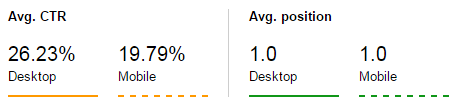
Conclusions:


- Overtook a competitor in the Featured Snippet / Direct Answer
- Occupied top 2 blended spots in the organic SERPs (direct answer + #1 ranking)
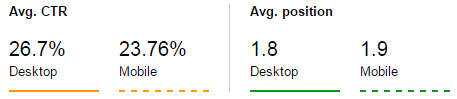
- 2% decrease on desktop CTR and traffic
- 17% decrease on mobile CTR and traffic
- Occupying the featured snippet decreased traffic – A #1 organic position with a competitor as the direct answer actually resulted in better CTR and traffic than occupying both the top organic position and the featured snippet.
- Mobile CTR/traffic is worse – Depending on the query/answer pair, users on mobile devices are much less likely to click through if they are provided a direct answer via the featured snippet. This makes sense given what we know about user behavior on mobile devices.
- Google is the big winner again
Case Study #3 – No Prior Featured Snippet Existed
This case study is perhaps the most interesting and compelling. For this target query, there was no featured snippet or direct answer leading up to the test. I made some optimizations and was able to get the client into the featured snippet spot a day later. I monitored CTR and traffic before and after. It appears the addition of the featured snippet combined with the nature of the query led to a significant decrease in CTR and traffic.
Results
4 Weeks at #1, Before Any Featured Snippet Placement
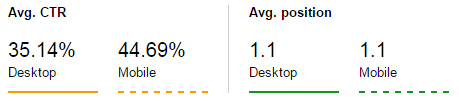
4 Weeks at #1 and as the Featured Snippet – Top 2 Blended Positions
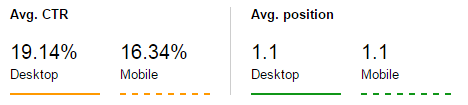
Conclusions:


- No featured snippet showed for the query before
- Occupied top 2 blended spots in the organic SERPs (direct answer + #1 ranking)
- 46% decrease on desktop CTR and traffic
- 63% decrease on mobile CTR and traffic
- Occupying the featured snippet decreased traffic a lot – A #1 organic position and a featured snippet placement massively dropped CTR and traffic.
- Mobile CTR/traffic is worse – Once again, mobile CTR and traffic dropped more than desktop, where users are slightly more likely to click through. This query also lends itself to having more of a direct answer and therefore the user is less likely to click through for more information.
- Google is the big winner again – Notice a trend here?
Case Study #4
This case study illustrates what others have promoted, but put in context with the above case studies hopefully encourages you to run your own tests. For this “how to” target query, the client overtook a featured snippet from a big brand where the client had previously ranked in the 6th to 8th spot on average. After some optimizations the client was listed as the direct answer source. I monitored CTR and traffic before and after. Here’s what happened:
Results
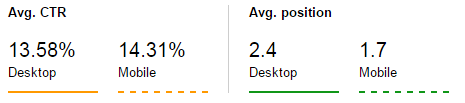
4 Weeks at #6 Before Being Featured Snippet
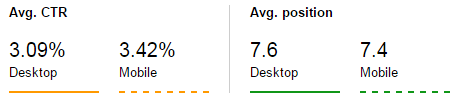
4 Weeks at #6 and as the Featured Snippet
Conclusions:


- 340% increase on desktop CTR and traffic
- 318% decrease on mobile CTR and traffic
- Occupying the featured snippet increased traffic – Since the client ranked further down the page and naturally had lower CTR and traffic, the featured snippet placement definitely boosted these metrics.
- Mobile CTR/traffic is worse – Even though they increased, mobile CTR and traffic did not increase as much as they did on desktop. Again, this is likely due to mobile behavior.
- Google is the big winner once again – even though traffic increased, CTR is lower than normal for being so high in the SERPs.
Final Conclusions
Will featured snippets always increase your traffic?
No, not always – but you should test for yourself and come to your own conclusions. Some examples where you may see an increase in traffic are: page is currently ranked third or lower for the query and/or the query/answer pair are more suited to the user learning more than what’s presented.
Some examples where you may not see a traffic increase are when the featured snippet directly answers the person’s query and/or the site is ranking 1st or 2nd.
How do featured snippets affect CTR on mobile vs desktop?
It appears that direct answers or featured snippets have a more negative impact on mobile CTR, likely due to the nature of mobile devices and users, people wanting to quickly digest information on the go, and the fact that these featured snippets take up a lot of real estate on a mobile phone screen.
Who benefits the most from the featured snippets (aka direct answers)?
It certainly seems like Google is the big winner, particularly on mobile, which we know has been a big focus and area of growth for them. There are only so many clicks to go around and any time Google adds another element to the SERPs, it takes another piece of the pie for themselves.
It’s a zero-sum game and Google has a lot of incentive to keep more users on Google by answering people’s questions via their scrape-and-replace tactics.
Is it good for users or good for Google?
Some might argue both, but it’s arguably not great for site owners as Google continues to push the limits of how it can profit off the backs of millions of webmasters.